PEPA
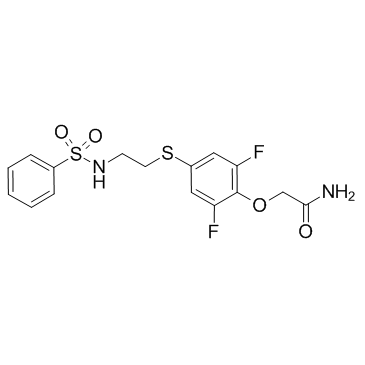
PEPA structure
|
Common Name | PEPA | ||
|---|---|---|---|---|
| CAS Number | 141286-78-4 | Molecular Weight | 402.43600 | |
| Density | N/A | Boiling Point | N/A | |
| Molecular Formula | C16H16F2N2O4S2 | Melting Point | N/A | |
| MSDS | Chinese USA | Flash Point | N/A | |
Use of PEPAPEPA is an allosteric modulator of AMPA receptors; binds to the GluA2o and GluA3o LBDs and can be utilized as an indicator of AMPA receptor heterogeneity.IC50 value:Target: AMPAR modulatorin vitro: PEPA dose-dependently potentiated AMPA-induced increase of [Ca2+]i. In 90% (72 out of 80) of the cells in which cyclothiazide acts, PEPA potentiated the increased [Ca2+]i induced by AMPA with pronounced cell-to-cell variation in rat hippocampal cultures [1]. PEPA bound to the binding domains of the GluA2 and GluA3 flop isoforms of AMPA receptors [2]. coapplication of AMPA with PEPA protected hippocampal CA1 neurons from brain ischemia-induced death. Coapplication of AMPA with PEPA could prevent downregulated expression of GluR2 subunit caused by ischemia and increase BDNF expression via Lyn-ERK1/2-CREB signaling [4].in vivo: PEPA (3, 10, 30mg/kg body weight) or vehicle was intraperitoneally administered into stressed mice once before the first extinction session. The significant decrease of the freezing response in the extinction sessions was only seen in the 30mg/kg PEPA-administered stressed mice, compared with vehicle-administered stressed mice [3]. |
| Name | 2,6-Difluoro-4-[2-(phenylsul-fonyl-amino)-ethyl-thio]-phenoxy-acet-amide |
|---|---|
| Synonym | More Synonyms |
| Description | PEPA is an allosteric modulator of AMPA receptors; binds to the GluA2o and GluA3o LBDs and can be utilized as an indicator of AMPA receptor heterogeneity.IC50 value:Target: AMPAR modulatorin vitro: PEPA dose-dependently potentiated AMPA-induced increase of [Ca2+]i. In 90% (72 out of 80) of the cells in which cyclothiazide acts, PEPA potentiated the increased [Ca2+]i induced by AMPA with pronounced cell-to-cell variation in rat hippocampal cultures [1]. PEPA bound to the binding domains of the GluA2 and GluA3 flop isoforms of AMPA receptors [2]. coapplication of AMPA with PEPA protected hippocampal CA1 neurons from brain ischemia-induced death. Coapplication of AMPA with PEPA could prevent downregulated expression of GluR2 subunit caused by ischemia and increase BDNF expression via Lyn-ERK1/2-CREB signaling [4].in vivo: PEPA (3, 10, 30mg/kg body weight) or vehicle was intraperitoneally administered into stressed mice once before the first extinction session. The significant decrease of the freezing response in the extinction sessions was only seen in the 30mg/kg PEPA-administered stressed mice, compared with vehicle-administered stressed mice [3]. |
|---|---|
| Related Catalog | |
| References |
| Molecular Formula | C16H16F2N2O4S2 |
|---|---|
| Molecular Weight | 402.43600 |
| Exact Mass | 402.05200 |
| PSA | 132.17000 |
| LogP | 4.07150 |
| InChIKey | GTACSIONMHMRPD-UHFFFAOYSA-N |
| SMILES | NC(=O)COc1c(F)cc(SCCNS(=O)(=O)c2ccccc2)cc1F |
| Storage condition | 2-8℃ |
| Personal Protective Equipment | Eyeshields;Gloves;type N95 (US);type P1 (EN143) respirator filter |
|---|---|
| RIDADR | NONH for all modes of transport |
| HS Code | 2935009090 |
| HS Code | 2935009090 |
|---|---|
| Summary | 2935009090 other sulphonamides VAT:17.0% Tax rebate rate:9.0% Supervision conditions:none MFN tariff:6.5% General tariff:35.0% |
|
Positive modulation of AMPA receptors prevents downregulation of GluR2 expression and activates the Lyn-ERK1/2-CREB signaling in rat brain ischemia.
Psychopharmacology 20 , 65-77, (2010) alpha-amino-3-hydroxy-5-methyl-4-isoxazolepropionic acid receptors (AMPARs) are responsible for excitotoxicity induced by ischemic injury in hippocampal CA1 neurons, whereas the molecular mechanisms r... |
|
|
Activation of AMPA receptor in the infralimbic cortex facilitates extinction and attenuates the heroin-seeking behavior in rats.
Neurosci. Lett. 612 , 126-31, (2016) Infralimbic cortex (IL) is proposed to suppress cocaine seeking after extinction, but whether the IL regulates the extinction and reinstatement of heroin-seeking behavior is unknown. To address this i... |
|
|
The rostromedial tegmental nucleus modulates behavioral inhibition following cocaine self-administration in rats.
Neuropsychopharmacology 40(4) , 861-73, (2015) Recent findings suggest that the mesolimbic dopamine neurons, known to promote cocaine-seeking behavior, are strongly inhibited by a newly characterized region of the midbrain known as the rostromedia... |
| 2,6-Difluoro-4-[2-(phenylsulfonylamino)ethylthio]phenoxyacetamide |
| 2-[4-[2-(benzenesulfonamido)ethylsulfanyl]-2,6-difluorophenoxy]acetamide |
| PEPA |